


Understanding Option Trading-trade in volatile market.
Volatility is a measure of how much the price of a financial instrument varies over time. It's a critical factor in options pricing and trading because it reflects the uncertainty or risk associated with the price changes of the underlying asset. Higher volatility generally means higher option premiums, which can affect your trading decisions and strategies.
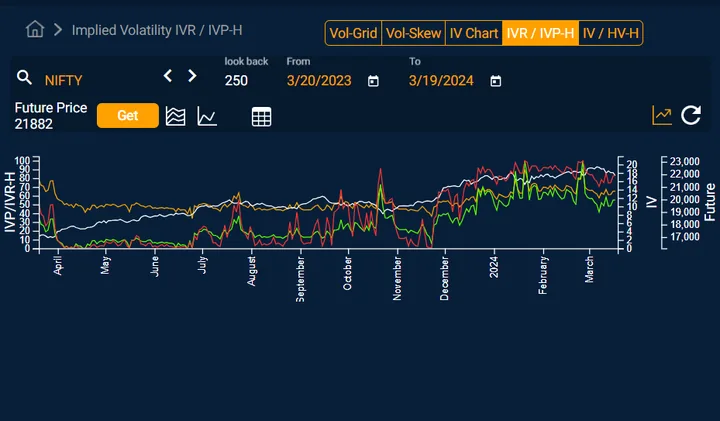
Implied Volatility Rank (IVR) is a metric that compares the current implied volatility of an option to its range over a specific period, usually the past year. A high IVR indicates that the current implied volatility is high relative to its historical range, while a low IVR suggests the opposite. IVR helps traders determine whether an option is relatively expensive or cheap based on its volatility.
Implied Volatility Percentile (IVP), on the other hand, measures where the current implied volatility stands relative to all its past values over a given period. For example, if the current IVP is 80%, it means that the current implied volatility is higher than 80% of all past values during the specified timeframe. IVP is useful for understanding the likelihood of future volatility movements and making informed trading decisions.
What you’ll learn

Prasanna Jadhav is a certified options specialist with a wealth of knowledge and research in technology and financial markets. His knowledge of options trading and insights are very helpful , establishing himself as one of the top expert for acquiring insights into Equity Derivatives Trading.
All 242 videos by Prasanna →